


JESSICA CURADO
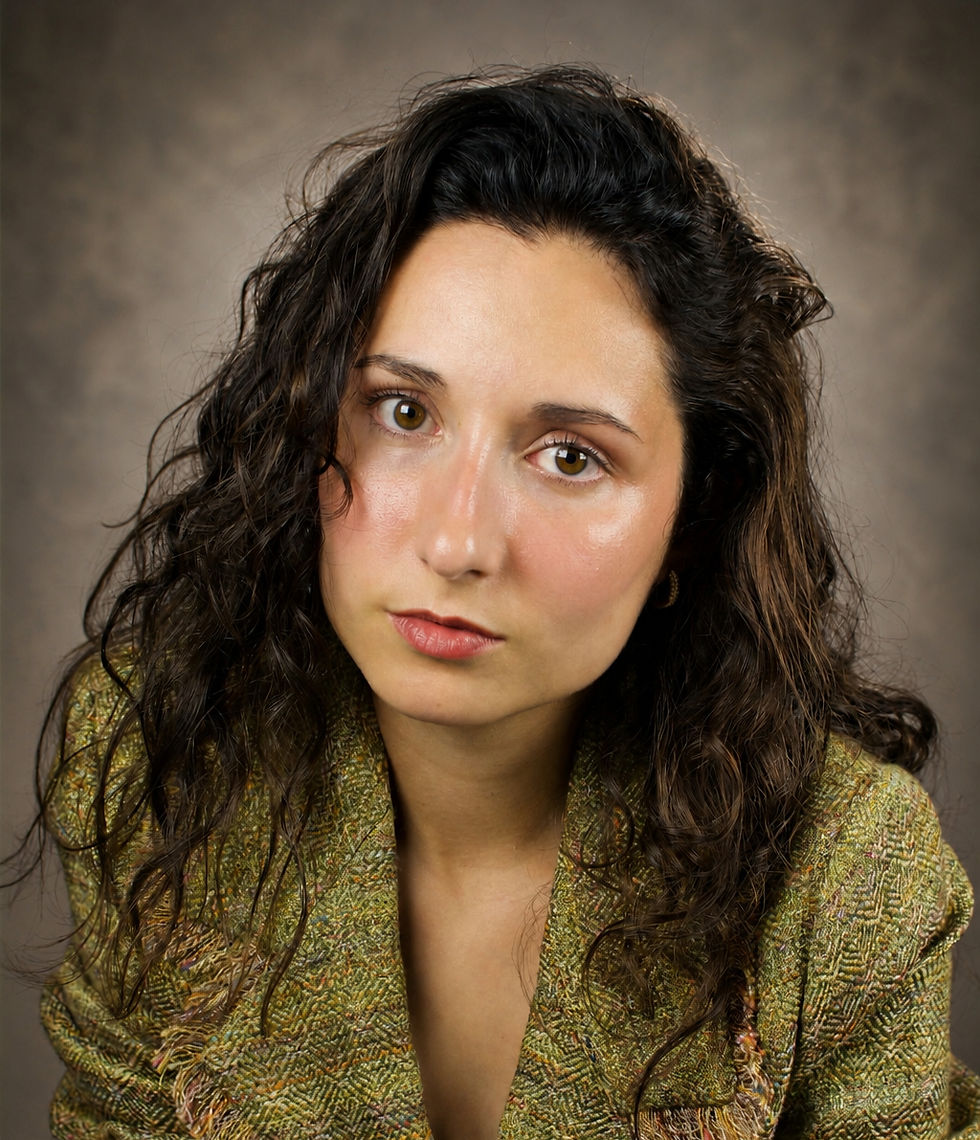
MR: Hey Jessica, welcome to the community! What have you been up to lately?
JC: The past year has brought a lot of changes to my life. I became a mum, and that meant putting my acting career on hold for a while. At the same time, I feel incredibly fulfilled and blessed to be experiencing this chapter. Being a mother is the most amazing thing in the world, but it is also the most demanding and important full-time job there is.
I’ve always been a very creative person, and interestingly, during my pregnancy, that part of me seemed to disappear somewhat. I was afraid that I might never feel that desire to create again — to write, to make things happen, to bring characters to life. There were times when I felt like I had all the time in the world because I wasn’t working, but I simply didn’t have the drive or the energy to create. I questioned many times whether I would ever feel that way again.
Now, ten months later, I feel like I’m slowly finding that Jessica again — the one who was so passionate about creating. And it makes me incredibly happy to realise that she didn’t disappear; she was just hibernating for a while, perhaps so she could come back stronger.
So right now, I feel like I’m reconnecting with myself as an artist, ready to keep growing and making things happen, with less fear and much more proactivity.
MR: You recently joined the community, with a specific intention to re-focus on your career after starting a family. What is priority on your list?
JC: My priority is definitely to learn, study, study, study, put myself out there, network and create my own projects. I don’t want to sit around waiting for opportunities to come to me. I want to make things happen for myself.

MR: That is precisely the ethos behind MR - making things happen for yourself as an artist, rather than waiting around for a phone call. Prior to this year, you produced, wrote and acted in a short. How did the idea for the story come to you? Tell us about the story itself.
JC: The project actually came from a need rather than a desire to make a short film. We were a group of actors who all shared the same goal: to create opportunities for ourselves, rather than waiting for them to come to us, and to have material that would allow us to showcase what we could do as actors.
Interestingly, we approached the project almost backwards. Instead of starting with a script or a story, each of us created a character, beginning with a monologue written from that character’s perspective. We then brought those characters together, shared what we had created, and started building the story around them — finding connections between the characters and developing the plot organically.
Initially, the intention was simply to film individual scenes that we could use as acting material. But as the characters and their relationships developed, the project became much bigger than we had originally imagined. A production company eventually came on board after seeing what we were creating, and that gave us the opportunity to turn it into an actual short film.
The film is a crime drama centred around a murder, with three women who are all suspects and all have reasons that could make them capable of it. But for me, what became most interesting was that the story ultimately wasn’t really about solving the murder. It was about what lies underneath each character — their past, their pain, their vulnerability and the experiences that have shaped who they are. My character, Jane, for example, is struggling with addiction, and although she has reasons that could make her a suspect, what interested me most was exploring the person behind that and allowing the audience to see her vulnerability.
Looking back, I love that the project wasn’t born with a perfectly defined plan. It evolved naturally from a group of actors simply deciding to create something for ourselves — and ultimately became something much bigger than we had initially set out to make.
MR: What was the biggest thing you learnt from the process of making it?
JC: The biggest thing I learnt was just how precious time is in this industry. Every minute counts, and being involved in the whole process gave me a completely different understanding of how much work goes into bringing something from an idea on a page to something you can actually see on screen.
As actors, we can sometimes arrive on set and only see our small part of the process. Creating something from scratch made me realise how valuable it is to understand what happens across all the different departments and how everything connects. It gave me a much deeper appreciation for everyone involved in making a project happen.
But perhaps the most unexpected thing I discovered was that I really love writing. I hadn’t considered myself a writer before, and I was genuinely surprised to find that I not only enjoyed the process, but that I might actually have something to say through writing. Seeing something that started as an idea in our heads eventually become a finished film was incredibly rewarding, and it definitely made me want to keep creating.

MR: How did it change your approach to acting?
JC: I wouldn’t say it changed the way I approach acting itself, but it definitely made me take the profession even more seriously and approach it with an even greater sense of professionalism.
It taught me how important collaboration, teamwork and supporting one another are in creating something that everyone can be proud of. When you are involved in a project from the very beginning, you understand much more clearly that every person involved has an important part to play in bringing the final piece to life.
More than anything, the experience made me admire the industry even more and deepened my passion for filmmaking. I genuinely love cinema and I love being part of the process of making it. I honestly don’t think I could ever stop doing this — even if I had all the money in the world, I would still want to make films. It will never be about the money or the success, but about the passion.
MR: Do you have any other ideas you are working on or going to develop?
JC: Yes, I have ideas that I’m really keen to bring to the table, including to the labs at Modern Rituals. I have to be honest, though, I haven’t yet had the time to dedicate myself to them in the way I would like.
There is a lot happening in my life at the moment. I’m trying to become active again, get back into studying, reconnect with the industry and build my career, while also being a full-time mum. It hasn’t been easy to balance everything, but I’m very focused on making it happen.
I’m learning to trust the timing of things and, when the time is right, I’ll bring those ideas to life. I know I will have concrete things to share and show — I just want to make sure I give them the time and attention they deserve.
MR: Where do you see the storytelling landscape heading with all the challenges abounding at the moment?
JC: I think there are a lot of challenges facing the storytelling landscape at the moment, and of course AI is one of the biggest conversations. We are already seeing incredible things being created with AI, including synthetic actors and stories that can be generated almost instantly. But personally, I believe that the more technology develops and the easier it becomes to create almost anything, the more valuable what is real and genuinely human will become.
We already live in a world that is saturated with perfection. Through social media, we constantly see perfect lives, perfect images and people who seem to have everything figured out. I think there is already a growing desire for something more honest — stories about real people, real struggles, imperfections and the things we all experience but don’t always show.
That’s also what I find so magical about acting. I love observing real people — their mannerisms, their stories and the lives they live — and bringing elements of that humanity into a character. I believe every life is worthy of being seen and every person has a story worth telling.
For me, the most powerful storytelling will always have something lived behind it: a real emotion, a real experience, a real human perspective. Technology can create something that looks incredibly real, but I don’t think anything can replace the emotional weight of a story that has actually been lived and felt.
So, while I don’t know exactly where the industry is heading, I do believe that truth, vulnerability and human connection will always have a place in storytelling. In fact, I think the more artificial our world becomes, the more we will value stories that remind us what it means to be human.
CONNECT WITH JESSICA
Comments